- Why Most Medical Conference Agendas Lose the Room
- Session Format by Audience: The Comparison Table
- The Keynote-to-Breakout Ratio
- Medical Conference Speakers Worth the Slot
- Three Common Agenda Mistakes
- Building the Agenda Backwards
- How to Schedule the Day So the Room Stays Full
- The Program-Committee Discipline That Separates Strong Conferences From Weak Ones
- What to Do With the Vendor Track
- The Bottom Line
Medical conference attendance is the most expensive labor cost in your program committee’s portfolio. A 2,000-attendee specialty conference at three days each is roughly 48,000 clinical hours that the program is asking the field to spend in your ballrooms. Most agendas waste a quarter of that.
This is the working playbook for designing a medical conference agenda that senior clinicians will actually sit through, with a comparison table of session formats by audience and a working list of medical conference speakers worth the slot.
Why Most Medical Conference Agendas Lose the Room
The patterns are consistent across specialties. The agenda over-indexes on plenary keynotes and under-invests in moderated debate. The breakouts repeat the keynote thesis instead of operationalizing it. The vendor sessions are bundled into the main flow rather than fenced. And the schedule has no breathing room, which means the senior clinicians in your audience leave during the second day to do real work from their hotel rooms.
The fix is not more content. It is a tighter session-format match to the audience. A 50-minute keynote works for a generalist medical association. It does not work for a specialty society where the audience knows the speaker’s published work better than the speaker remembers it. Pick the format first. Then pick the speaker.
Session Format by Audience: The Comparison Table
| Audience Type | Best Format | Length | Why It Works |
|---|---|---|---|
| Specialty society (sub-specialist clinicians) | Moderated debate, two senior voices | 60 minutes | Sub-specialists already know the literature. They want to see experts disagree. |
| Generalist medical association | Main-stage keynote plus Q and A | 60 minutes | Audience seniority varies. A clear argument with a Q and A defends the thesis. |
| Health-system leadership retreat | Fireside chat with system CEO | 45 minutes | Operators want a peer conversation, not a lecture. |
| Clinical innovation summit | Workshop or master class | 90 to 120 minutes | Innovation audiences come to do work, not listen. |
| Resident or fellow event | Panel of recent graduates plus senior mentor | 75 minutes | Career-focused audiences want lived experience and forward-looking advice. |
| Payor or population-health summit | Closed-door briefing | 60 to 90 minutes | Payor audiences need candor that does not survive a public stage. |
| Patient safety or quality conference | Case-based panel with clinical leaders | 75 minutes | Quality audiences learn from cases, not principles. |
The Keynote-to-Breakout Ratio
For a three-day medical conference of 1,500 to 2,500 attendees, the ratio that consistently scores well in evaluations is roughly two main-stage plenaries per day, three to four breakout tracks running in parallel, one moderated debate per day, and one workshop or skills-based session per day. The plenary work sets the strategic frame. The breakouts and workshops do the operational work. The debate is where the specialty arguments actually live.
The mistake most committees make is loading the program with five plenary keynotes per day. The first two are well attended. The fifth has half the room.
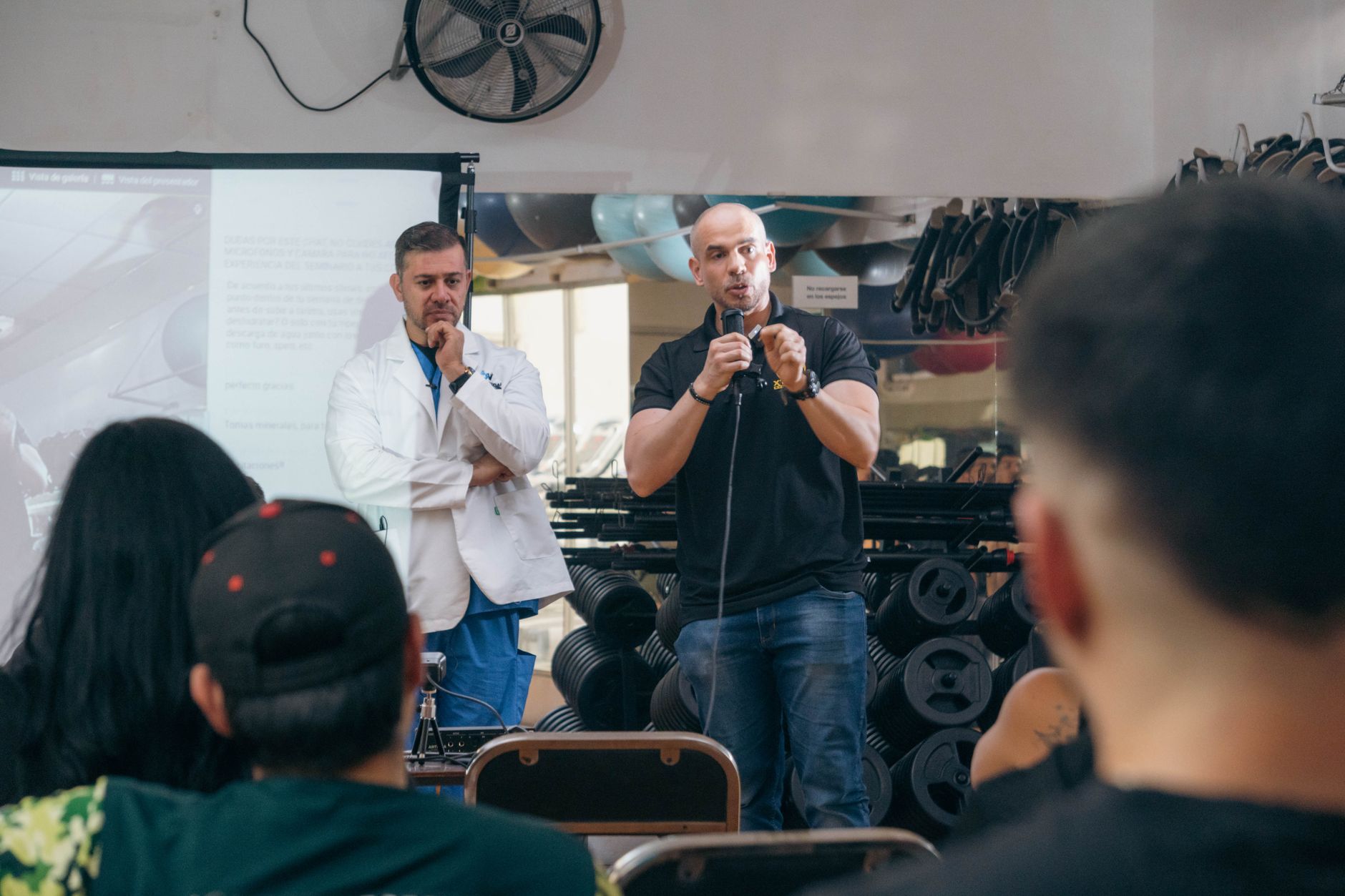
Medical Conference Speakers Worth the Slot
The names below come up consistently in our re-book data at medical conferences across specialty and generalist programs.
- Dr. Atul Gawande. The category-defining voice on systems thinking and clinical performance. Strong fit for any generalist medical conference and for surgery-specialty programs.
- Dr. Sanjay Gupta. Practicing neurosurgeon and CNN Chief Medical Correspondent. Translates the future of medicine for any audience from clinical staff to hospital boards.
- Dr. Vivek Murthy. Two-time U.S. Surgeon General. The clearest voice on workforce burnout and clinical leadership.
- Dr. Rana Awdish. Pulmonary critical-care physician. The leading voice on patient experience as a clinical and operational issue.
- Dr. Eric Topol. Cardiologist and author of Deep Medicine. The institutional voice on AI in clinical medicine.
- Dr. Aaron Carroll. Pediatrician and New York Times columnist. Health-policy commentary that lands with clinical audiences.
- Dr. Zubin Damania (ZDoggMD). Founder of Health 3.0. Sharp, funny, and a fixture at clinical-staff and resident events.
- Dr. Daniel Kraft. Founder of Exponential Medicine. The leading futurist who actually speaks the language of clinical practice.
- Dr. BJ Miller. Palliative-care physician. The strongest voice on end-of-life conversations and how clinical teams handle them.
- Dr. Donald Berwick. Founder of the Institute for Healthcare Improvement, former CMS administrator. The grandfather of quality improvement.
Three Common Agenda Mistakes
- The opening plenary is too soft. Conferences that open with an inspirational keynote signal to the audience that the program will not respect their time. Open with a substantive keynote that sets the strategic question for the conference.
- The vendor track is bundled into the main flow. When commercial sessions are not clearly fenced, the room treats every keynote with the same suspicion. Fence sponsor sessions on a separate track and label them.
- The closing session is forgotten. By day three, attendance drops because the program signals that the closing session is forgettable. Book a marquee speaker for the closing plenary, not just the opening one.
Building the Agenda Backwards
The most disciplined committees we work with build the agenda backwards from a single strategic question. “What is the field’s honest answer to AI in clinical practice?” “How does this specialty navigate the workforce shortage?” “What does value-based care look like inside our specialty in 2026?” Pick one question per conference. Map every plenary, breakout, debate, and workshop to that question. Cut anything that does not.
Conferences with a single organizing question score 18 to 22 percent higher in attendee evaluations than conferences with a generic theme. The audience can feel the discipline. They reward it with attendance on day three.

How to Schedule the Day So the Room Stays Full
Audience attention is non-uniform across a conference day, and most committees still schedule against an idealized version of the audience that ignores the reality. Three scheduling rules consistently improve retention. First, never schedule a soft-content session in the 9 a.m. opening slot. Senior clinicians are at peak attention in the first 90 minutes of the day, and a generic motivational opener spends that attention without earning it. Save the strongest substantive keynote for that slot. Second, build a real lunch break, 75 minutes minimum, with seated food rather than a quick stand-up reception. Senior attendees use lunch for peer conversations that are part of why they are at the conference, and shrinking lunch shrinks attendance for the early-afternoon sessions. Third, end day-one sessions by 5 p.m. so the evening reception is not competing with content. The committees that try to squeeze a 5:30 keynote into day one consistently see day-two morning attendance drop by 12 to 15 percent.
The Program-Committee Discipline That Separates Strong Conferences From Weak Ones
Strong medical conference agendas are produced by program committees that operate with two specific disciplines. First, every proposed session is required to identify the operational decision the audience will face when they leave the room. Sessions that cannot answer that question are cut, regardless of speaker name. Second, the committee runs a dry-read of the full agenda four weeks before the event, walking through every session title and abstract in sequence as if they were an attendee. The dry-read consistently surfaces redundancy, ordering problems, and tonal mismatches that no individual session review catches. Conferences that institute these two disciplines, the operational-decision filter and the four-week dry-read, score 25 to 30 percent higher in repeat-attendance rates than conferences that rely on individual session reviews alone.
What to Do With the Vendor Track
Commercial sessions are not the enemy. They fund the conference and they often deliver real product context that clinicians want. The mistake is bundling them into the main flow. Three rules keep the vendor track productive. Fence vendor sessions on a clearly labeled track that runs in parallel with the main academic flow. Cap commercial content at 20 percent of total session minutes, regardless of sponsorship pressure. And use a peer-review filter, the program committee should review vendor session abstracts the same way they review submitted abstracts. Conferences that hold those rules consistently report higher sponsorship renewals year-over-year, because vendors get a more engaged audience even with fewer total minutes. The committees that get this wrong typically fail in the same way, by treating sponsorship dollars as a substitute for editorial judgment. The strongest medical conferences treat sponsorship and editorial as parallel functions, with a clear firewall between the two, and they document that firewall in writing so that incoming committee members inherit the discipline rather than relearning it the hard way.
The Bottom Line
The agenda is the program committee’s product. Treat it like one. Match session format to audience type, hold the keynote-to-breakout ratio, fence the vendor track, and build the whole thing backwards from one strategic question. The keynote names matter. The agenda architecture matters more.
For more on selecting the keynote names that anchor a strong agenda, see our 2026 healthcare keynote guide and our roundups of hospital CEO speakers and AI healthcare speakers.
Browse our healthcare speakers roster or filter by healthcare leadership, innovation, and healthcare business.